Optics and Focal Lengths
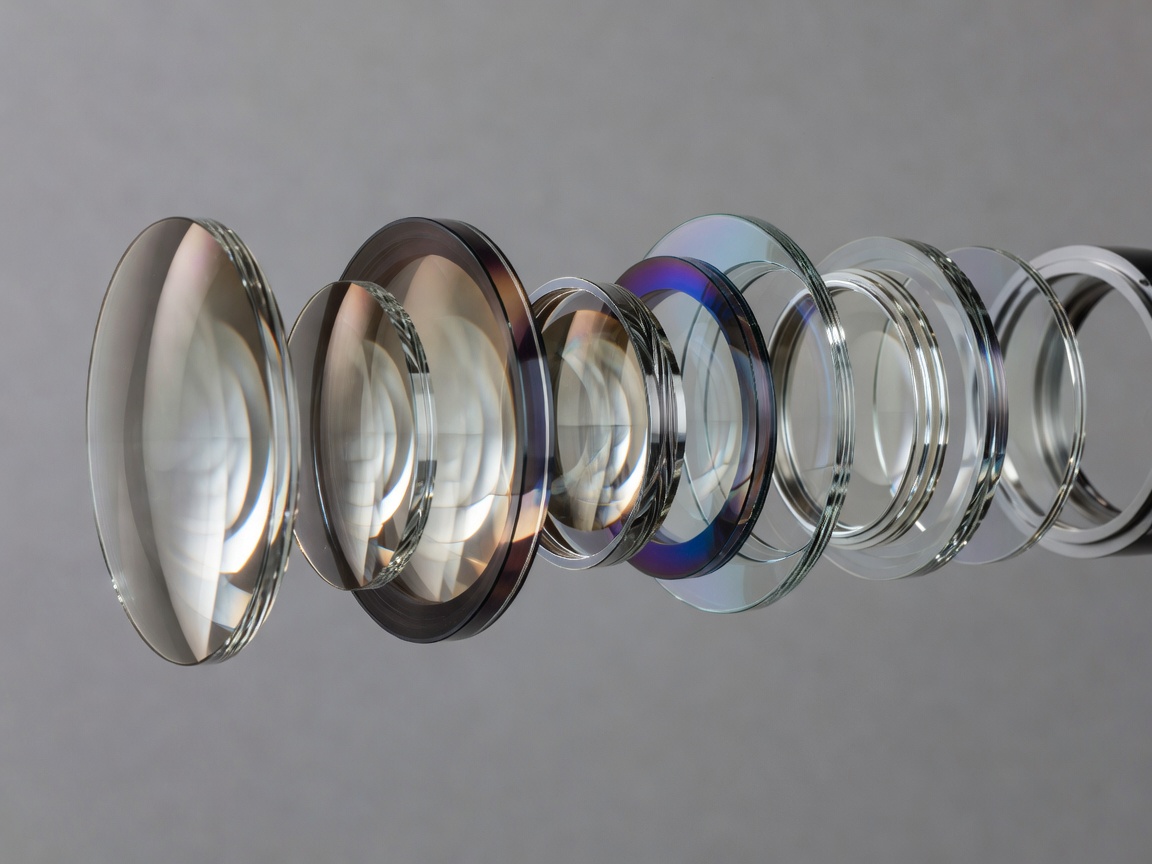
A camera sensor merely records light; the lens interprets it. The choice of glass is perhaps the most significant creative decision a cinematographer makes before stepping onto a set. Lenses alter perspective, define depth, and imprint their own unique organic character onto the digital image.
Focal Length and Perspective
Focal length, measured in millimeters, determines the angle of view. However, its true power lies in how it manipulates spatial relationships.
Wide-Angle Lenses (e.g., 18mm to 24mm): These lenses expand space. Backgrounds appear further away, and movement along the Z-axis (towards or away from the camera) feels exaggerated and fast. Wide lenses are ideal for establishing geography, making small rooms feel cavernous, or creating an intimate, slightly distorted presence when positioned physically close to an actor.
Telephoto Lenses (e.g., 85mm and above): Telephoto glass compresses space. The distance between the foreground subject and the background appears dramatically reduced, stacking visual elements on top of one another. Movement towards the lens seems sluggish. This compression is often used for isolating subjects, creating intense portraiture, or heightening the claustrophobia of a crowded scene.
Prime vs. Zoom
Cinema lenses are broadly categorized into primes (fixed focal length) and zooms (variable focal length).
- Prime Lenses: High-end cinema primes offer superior optical performance. Because they are engineered for a single focal length, they generally have fewer internal glass elements. This results in wider maximum apertures (faster T-stops, allowing for shallower depth of field and better low-light performance), sharper images, and less optical distortion. A cinematographer using primes must move the camera physically to change the framing.
- Zoom Lenses: Modern cinema zooms are marvels of engineering, holding a constant aperture throughout their focal range (parfocal behavior). While typically heavier and slightly slower (smaller maximum aperture) than primes, they offer unparalleled speed on set, allowing quick reframing without necessitating a lens swap.
"Every lens has a voice. Some are clinically sharp and modern, others are flawed, warm, and vintage. Choose the glass that speaks the language of your story."
Spherical vs. Anamorphic
The standard cinema lens is spherical, projecting a circular image onto the sensor. However, the pursuit of a wider aspect ratio led to the development of anamorphic lenses.
Anamorphic glass optically squeezes the image horizontally, packing a wider field of view onto a standard sensor area. In post-production, the image is "de-squeezed," resulting in the classic widescreen cinematic aspect ratio (often 2.39:1). Beyond aspect ratio, anamorphic lenses are prized for their unique optical flaws: characteristic horizontal lens flares (often blue), oval-shaped out-of-focus highlights (bokeh), and a subtle curvature or distortion toward the edges of the frame. These artifacts provide an organic, inherently "cinematic" feel that remains highly sought after in the digital era.