Spatial Composition
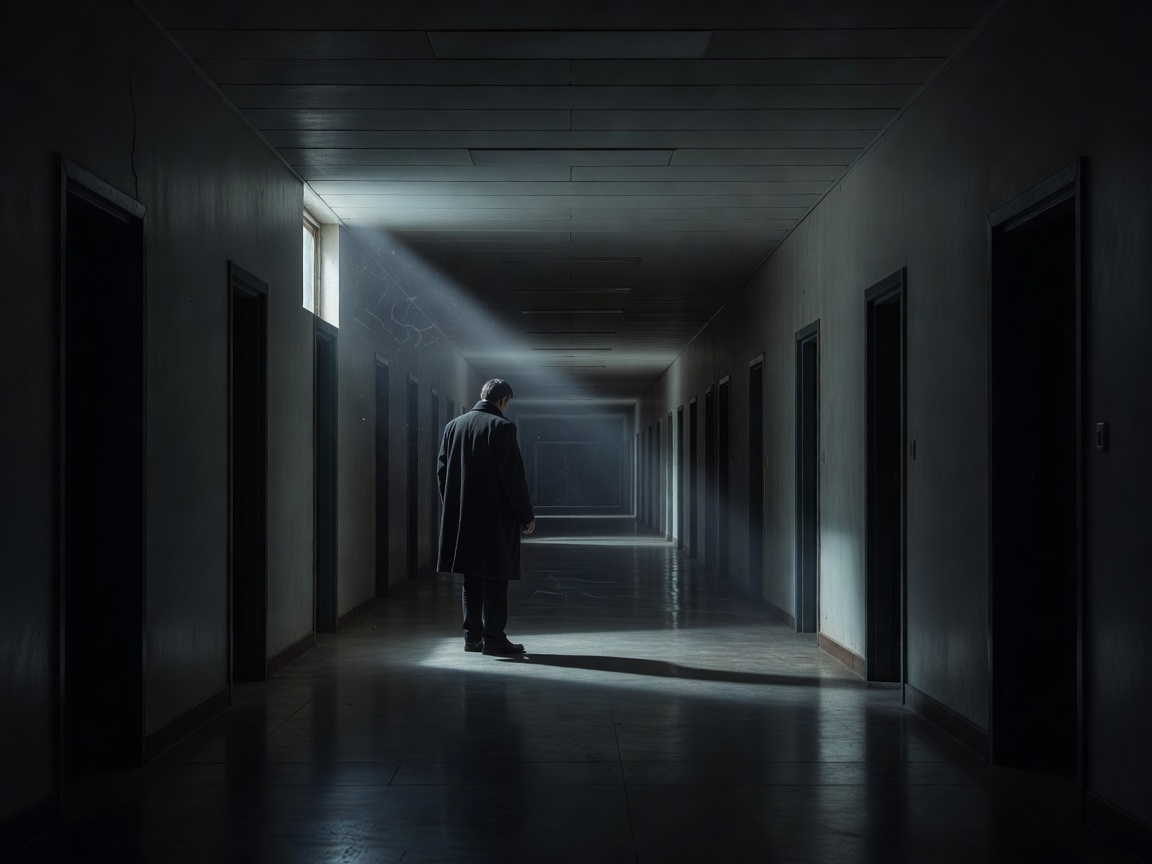
Composition is the deliberate arrangement of visual elements within the frame. It dictates how the viewer's eye travels across the image and heavily influences the subconscious emotional impact of a scene.
Beyond the Rule of Thirds
The Rule of Thirds is the most ubiquitous compositional guideline. By dividing the frame into a 3x3 grid, placing subjects along these lines or at their intersections typically yields a balanced, aesthetically pleasing image. However, rigidly adhering to this rule can lead to predictable, static visuals.
Masterful cinematographers frequently break this rule for narrative effect. Center framing, often associated with symmetrical compositions, creates a sense of unnatural order, authority, or tension. It forces the viewer to confront the subject directly. Conversely, pushing a subject to the extreme edge of the frame (short-siding) can generate a profound sense of isolation, vulnerability, or unease.
Depth and the Z-Axis
Film is a two-dimensional medium trying to represent a three-dimensional world. Creating depth—utilizing the Z-axis—is crucial for an immersive image.
- Foreground Elements: Placing out-of-focus elements in the immediate foreground provides a layer of texture and context. It anchors the viewer in the space and makes the image feel less like a flat photograph.
- Leading Lines: Architectural lines, roads, or even the gaze of other characters can serve as visual vectors that forcefully guide the viewer’s eye toward the focal point in the midground or background.
- Atmospheric Perspective: Utilizing haze, fog, or smoke reduces contrast and saturation in the background, mimicking how the human eye perceives distant objects and naturally separating layers of depth.
"Framing is a process of exclusion. What you leave out of the rectangle is often more important than what you put in."
Headroom and Lead Room
When framing human subjects, spatial margins are critical. Headroom is the space between the top of a subject's head and the top edge of the frame. Too much headroom makes the subject appear diminished or sinking; too little makes them feel boxed in.
Lead room (or look room) refers to the space in front of a subject in the direction they are looking or moving. Traditional composition provides more space in front of the subject than behind them, implying freedom or trajectory. Deliberately breaking this by framing a subject looking at the closest edge of the frame suggests they are trapped, cornered, or facing an immediate, unseen obstacle.