Lighting Ratios & Shaping
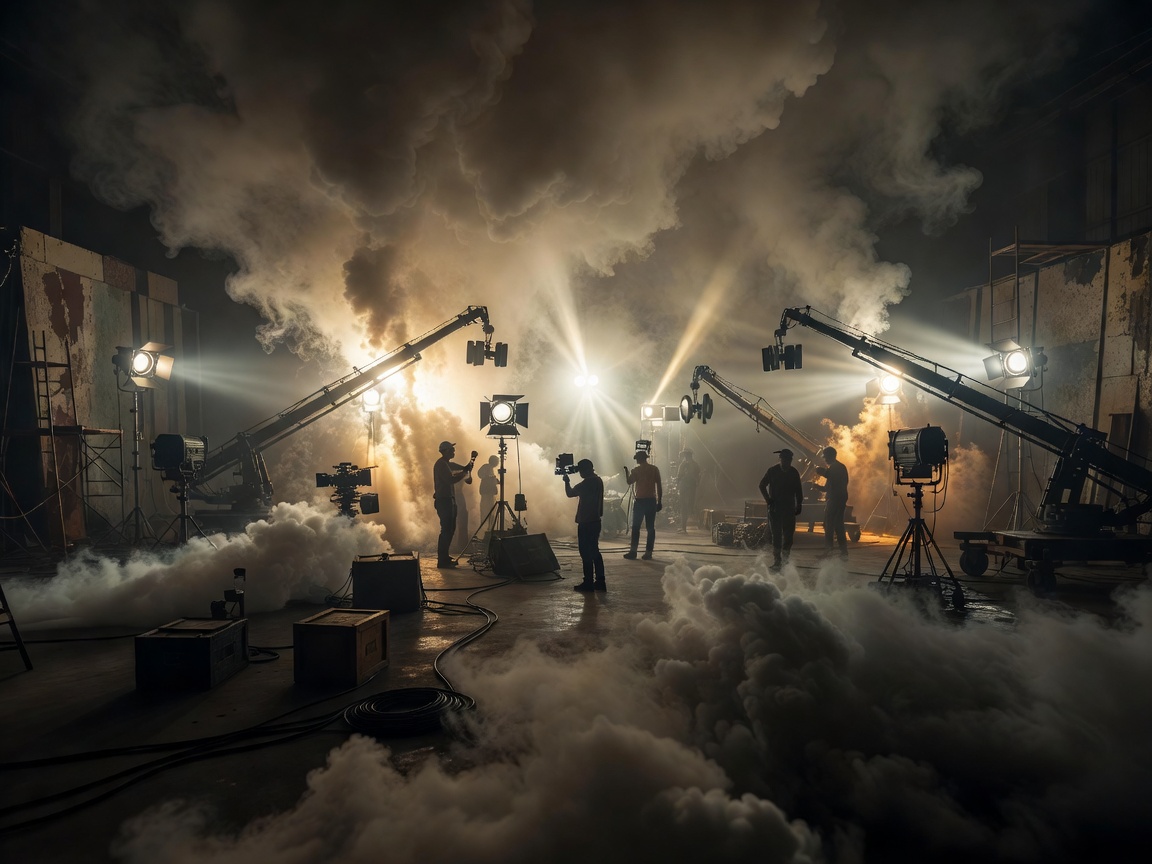
Lighting in cinematography is rarely about simply achieving adequate exposure. It is the architectural foundation of the image, determining depth, mood, and focus. Modern digital sensors have drastically increased in base sensitivity, allowing cinematographers to light for aesthetics rather than pure illumination.
The Quality of Light: Hard vs. Soft
A primary consideration in any lighting setup is the transition between light and shadow. The quality of a light source is entirely dependent on its relative size to the subject.
- Soft Light: Generated by large sources positioned relatively close to the subject. This creates gradual transitions (wrap) around facial features. Cinematographers achieve this using diffusion materials (like silks or grid cloth) or by bouncing a strong directional light off a large reflective surface (like unbleached muslin).
- Hard Light: Produced by small point sources or distant luminaires (such as the sun on a clear day, or an undiffused Fresnel unit). Hard light creates sharp, distinct shadows and emphasizes texture. While less forgiving on human faces, hard light is vital for creating distinct patterns, slashing backgrounds, or mimicking direct sunlight.
"Lighting is as much about the shadows you protect as the light you introduce. Negative fill is often your most powerful tool."
Contrast Ratios and Mood
The contrast ratio refers to the difference in intensity between the main source of illumination (the key light) and the shadows (the fill side). Measured in stops, this ratio dictates the tonal emotion of the scene.
A high-key lighting setup (often a 2:1 or 3:1 ratio) maintains low contrast. The fill light is almost as bright as the key, resulting in an evenly lit, bright image commonly used in comedies or corporate commercials. Conversely, a low-key setup employs a much higher contrast ratio (often 8:1 or more). Here, the fill side is left to drop into deep shadow, creating the dramatic, moody tension associated with thrillers and film noir.
Controlling this ratio frequently requires negative fill. Rather than adding light, cinematographers place large black flags (duvetyne or solid frames) just out of frame on the shadow side of the actor. This blocks ambient room bounce, deepening the shadows and instantly increasing contrast.
Motivated and Practical Lighting
A modern approach to lighting relies heavily on the concept of motivation. If a subject is lit from the right, the audience implicitly expects a source (a window, a lamp, a monitor) to exist in that direction. Practical lights—functional lamps visible within the frame—serve double duty. They act as actual illumination sources while logically justifying the existence of larger, off-screen cinematic fixtures used to shape the actor.
When augmenting practicals, color temperature matching is critical. Mixing daylight-balanced sources (around 5600K) with tungsten-balanced sources (around 3200K) must be done intentionally. Unintentional color mixing can result in murky, unpleasing skin tones, whereas deliberate mixing can create stunning color contrast (e.g., cool moonlight through a window contrasting against warm interior practical lamps).
Core Lighting Terms
| Term | Definition |
|---|---|
| Key Light | The primary light source establishing the exposure and directionality of the scene. |
| Fill Light | Secondary light used to raise shadow levels and control the contrast ratio. |
| Backlight / Rim | Placed behind the subject to separate them from the background via an edge highlight. |
| Practicals | Visible light sources in the shot, like desk lamps, used to justify off-camera lighting. |